
Journal ·
Burbank Front Yard Rules: Paving, Driveways and Artificial Turf
In Burbank's R-1 and R-1-H single-family zones, no more than 45 percent of the required front yard setback may be hardscaped, and artificial turf may cover no more than half of the landscaped part. Everything in that setback that is not paved must be planted and maintained, and the driveway at the curb may take no more than 25 percent of the lot width, with no single driveway over 15 feet. These limits sit in Municipal Code section 10-1-603, and they decide what a lawn swap, a wider driveway or a new paver patio can look like on a typical Burbank lot.
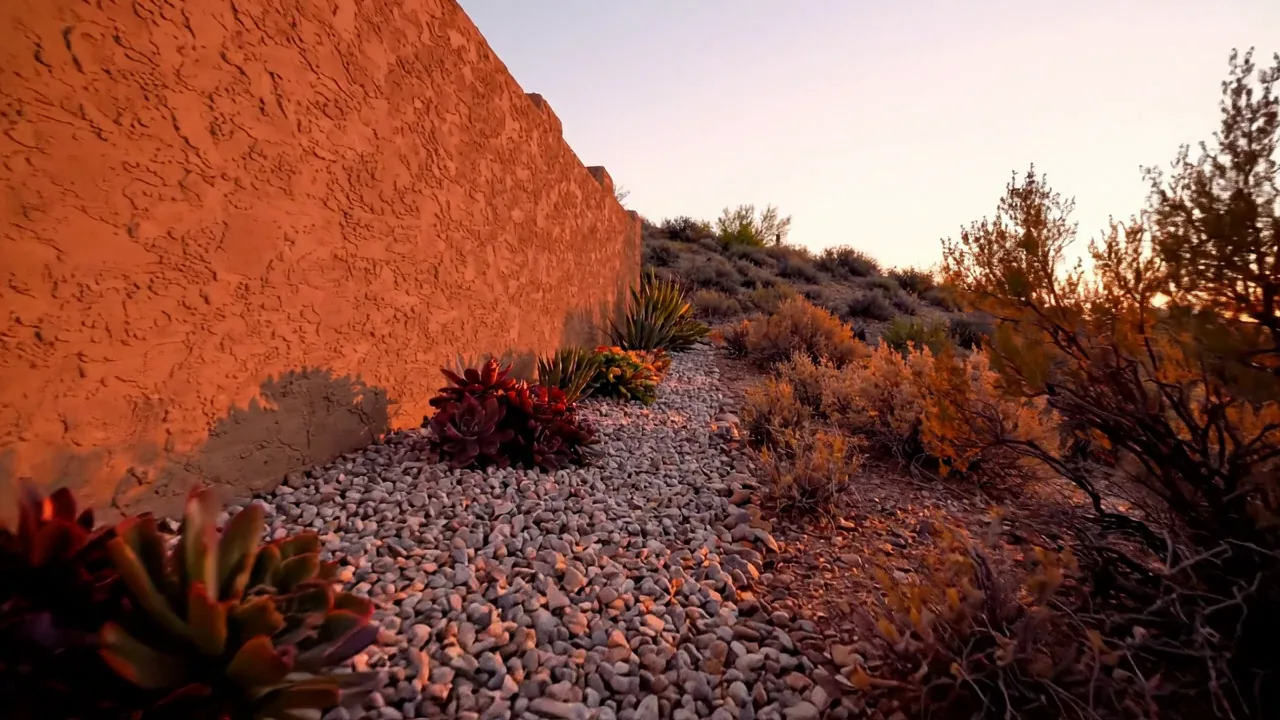
How much of a Burbank front yard can be paved?
Section 10-1-603(G)(5)(a) caps hardscape at 45 percent of the required front yard or street-facing side yard setback area. Hardscape is defined broadly: cement concrete, asphalt, brick, pavers "and similar impervious or semi-pervious paved surfaces". A further 5 percent is allowed for decorative brick or decorative paving inside a landscaped area, if it is needed for access or to complete a landscape design.
The cap applies to the required setback, not to every square foot between the house and the sidewalk. In these zones the front setback is set by averaging: Table 10-1-603(A) points to the average front yard setback on the blockface, and subsection (G)(1) takes that average from lots on the same block within 250 feet on either side. Setbacks of more than 150 percent of the average are left out. A house set well behind its neighbors therefore has a required setback area that is smaller than its whole front yard. Where exactly that line falls on a given lot is a question for the Planning Division, not a tape measure alone.
What counts as hardscape, and where can it go?
The code also limits what the allowed paving may be used for. Under (G)(5)(b), hardscape in the front setback is limited to three things:
- a driveway leading directly from a street or alley to a garage or other required parking area;
- pedestrian pathways;
- encroachments specifically listed in Table 10-1-603(G).
Subsection (G)(5)(c) adds that no hardscaping may sit next to a driveway so as to create one continuous paved surface. Where a walkway is provided, a landscape buffer has to separate it from the driveway, and the walkway has to use a different surface material. The final design of the driveway, the pathway and the percentage of landscaping is subject to approval by the Community Development Director.
Vehicles follow the same logic. Subsection (G)(5)(d) says no vehicle may be parked in a required front yard or street-facing side yard except on a driveway, subject to section 10-1-1405. The details for motorhomes, boats and trailers are in our guide to RV, boat and trailer parking in Burbank.
How wide can a driveway be in Burbank?
Subsections (G)(5)(b) and (I) set the driveway numbers. A driveway must be at least 10 feet wide and surfaced with concrete, asphalt, brick, pavers or another permanent surface approved by the Traffic Engineer. It must lead from the street or alley to the garage or required parking "using the shortest and most direct route feasible". At the curb, the total width of driveways may not exceed 25 percent of the lot width, and no single driveway may exceed 15 feet.
Inside the required front setback, a driveway may be up to 20 feet wide when the garage sits behind the main house, provided total hardscape stays within 45 percent. Under (G)(5)(b), circular drives are permitted on lots 100 feet or more in width, provided the city's landscaping standards are met, in the context of lots fronting a major or secondary arterial street. Under (G)(6) and (I)(8), the City Planner and Traffic Engineer may approve a turnaround or circular driveway for such a lot as an exception.
Can you install artificial turf in a Burbank front yard?
Yes, within a limit. Section 10-1-603(G)(5)(a) says that if artificial turf is proposed for the front yard, "it shall be limited to half of the landscaped square footage." The remaining planted area stays planted.
This is where state law draws a line that many homeowners do not expect. Government Code section 53087.7 bars any California city, charter cities included, from adopting or enforcing a rule that prohibits drought-tolerant landscaping using living plant material on residential property. Subdivision (b) then states that drought-tolerant landscaping "shall not include the installation of synthetic grass or artificial turf." The protection covers living plants, and it does not cover turf.
Homeowners associations are treated differently. Civil Code section 4735 makes HOA rules void if they prohibit, or have the effect of prohibiting, artificial turf or low water-using plants. That statute governs association documents. The city's own half-of-the-planted-area limit is a separate rule, so an owner in an association has two layers to read.
Does the state water-efficient landscape ordinance apply to a lawn swap?
Burbank adopted the state Model Water Efficient Landscape Ordinance by reference in section 9-3-500, "as amended", through Ordinance 15-3,861, effective 27 February 2015. Under that section, no building permit is issued for a project subject to the ordinance until the Community Development Director approves landscaping plans that comply with it. Zoning subsection (G)(5)(e) repeats the link: newly installed front yard landscaping must meet the state water-efficient landscaping and irrigation requirements.
The state thresholds come from the current MWELO text, California Code of Regulations, title 23, section 491. It applies to new construction with a landscape area of 500 square feet or more, and to rehabilitated landscapes of 2,500 square feet or more, in both cases when the project requires a building or landscape permit, plan check or design review, and they count the whole project's landscape area. The front setback in the example below has well under 2,500 square feet of planting, while a new house with 500 square feet of landscape crosses the new construction line.
What does the BWP turf rebate require?
Burbank Water and Power runs the regional SoCalWaterSmart turf rebate for its customers. The BWP rebate page gives two figures that do not match: a "limited time" banner offering residents up to $4 per square foot, and body text that says up to $3. The page carries no date, so confirm the current rate when reserving funds.
The conditions on the same page are concrete:
- apply and receive a reservation before removing any turf;
- the lawn must be existing and alive, with a minimum of 250 square feet removed, or the whole area if smaller;
- synthetic turf is not eligible;
- 3 plants per 100 square feet, a stormwater retention feature, and no hardscape in the transformed area except permeable hardscape;
- overhead spray sprinklers replaced or modified.
The rebate allows only permeable hardscape inside the converted area. Whether a permeable surface such as gravel counts toward the city's 45 percent cap depends on whether it is a "paved" surface: the definition includes semi-pervious paving, and the Community Development Director approves the final design, so confirm with Planning before installing it. Parkway strips between the sidewalk and the curb have their own city rules, covered in our article on parkway trees in Burbank.
A worked example on a 50-foot lot
The numbers below assume a 50-foot-wide interior lot whose averaged front setback works out to 25 feet. They are an illustration of how the percentages interact, not a ruling on any real property.
| Item | Rule | Example result |
|---|---|---|
| Required front setback area | 50 ft x 25 ft | 1,250 sq ft |
| Hardscape cap | 45% of setback area | 562 sq ft |
| Extra decorative paving | up to 5% inside planting | 62 sq ft |
| Planted area left | remainder | about 625 to 688 sq ft |
| Artificial turf cap | half of the planted area | about 312 to 344 sq ft |
| Driveway width at the curb | 25% of lot width, max 15 ft | 12.5 ft |
| Minimum driveway width | (I)(9) | 10 ft |
| BWP rebate floor | live turf removed | 250 sq ft |
What should a buyer or seller check in the front yard?
A front yard that is mostly concrete, or turf from the porch to the sidewalk, is easy to see in listing photos. Whether it predates the current rules is a separate question, and the code's history notes show that section 10-1-603 has been amended repeatedly, including twice in 2022.
For a seller, the useful step before listing is to compare the yard with the permit history and the current percentages, and to describe paving plainly. The seller's guide covers what goes into disclosure preparation. For a buyer who plans a new driveway, a turf conversion or a paver court, the time to ask the Planning Division is before contingencies are removed; the buyer's guide walks through the purchase steps. Front yard fences and walls follow separate height limits, explained in Burbank fence, wall and hedge rules.
Q: Does gravel count toward the 45 percent? The definition covers "impervious or semi-pervious paved surfaces", and the Community Development Director approves the final percentage, so confirm how loose gravel is treated before installing it.
Q: Can the rebate pay for artificial turf? No. The BWP page lists synthetic turf as not eligible.
This article is general information, not legal advice. Rules change, and the Planning Division decides how they apply to a specific lot. Call Alla at (818) 699-5367 or use the enquiry form.
More on the city in the Burbank area guide.